Bird
The smallest penguin — and a dusk animal, not a daytime prop
Little penguins come ashore after dark. Official colonies publish the rules. This page will not invent a show time.
- Penguin species
- Smallest
- Return from sea
- After dusk
- Colony rule
- No flash
- /Little_Penguins.html
- .htm
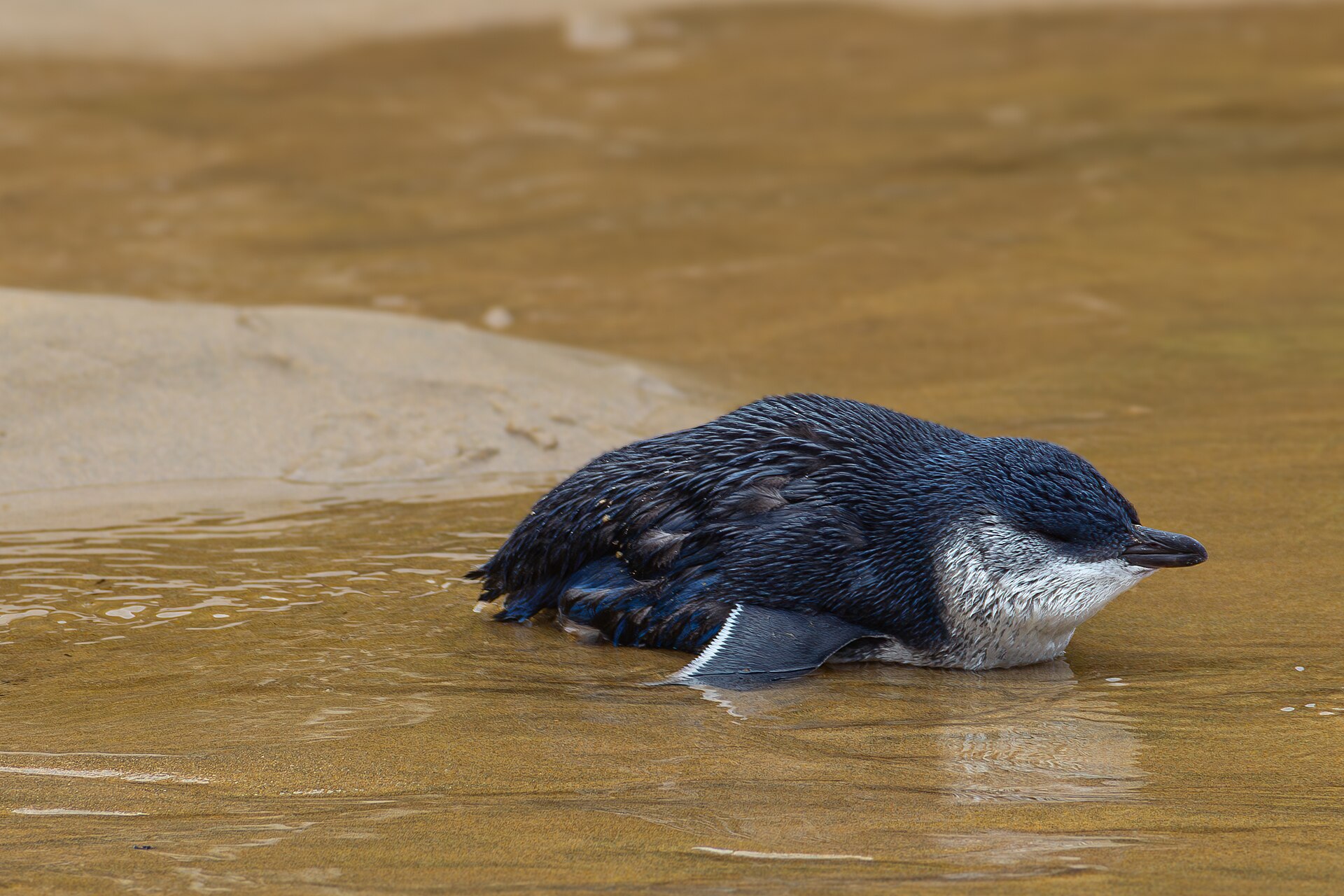
The little penguin (Eudyptula minor), also called the fairy penguin, is the world’s smallest penguin species. It breeds on southern Australian coasts and islands and in New Zealand. Birds come ashore after dusk. Flash photography and leaving the platform are how visitors become the colony’s problem.
Definition
Little penguin. Eudyptula minor — a small, blue-grey penguin of southern coasts. Some authors discuss Australian and New Zealand taxa separately; follow current taxonomy if you cite a paper.
Biology
Adults stand roughly 30–33 centimetres tall. They nest in burrows or under vegetation, feed at sea on small fish and squid, and are vulnerable to dogs, foxes, oil, and poorly managed tourism.
/Little_Penguins.html 301s here.
Viewing
Stay on the platform. Speak quietly. Do not pick up a bird “to help it across the path.” If you want a guaranteed education experience, book the official venue and follow their lighting. If you want a wild beach, you may see nothing — and you still do not use a torch in the birds’ eyes.
Read the journal essay.
The smallest penguin, southern coasts
Eudyptula minor is the world’s smallest penguin. Adults stand roughly 30–33 centimetres tall. They nest in burrows or under vegetation, feed at sea on small fish and squid, and come ashore after dusk. They breed on southern Australian coasts and islands, including well-known colonies in Victoria and Tasmania, and also in New Zealand — this page is the Australian visitor story.
Historic /penguin.htm, /features/penguin.htm, and /Little_Penguins.html 301 here.
Official venues versus a wild beach
Phillip Island Nature Parks and Parks Tasmania publish current rules for well-known colonies: lighting, flash, platforms, and dogs. This site will not invent a parade time or a ticket price. If you want a managed dusk viewing, book the official venue and stay on the path. If you want a wild beach, you may see nothing — and you still do not use a torch in the birds’ eyes or pick up a bird “to help it across the path.”
Parks Australia and state parks services also manage island and coastal reserves with penguin or shearwater rules. Follow the sign. Flash photography and leaving the platform are how visitors become the management problem.
Threats, without a homemade fix
Dogs, foxes, oil, vehicle strike, and poorly managed tourism show up in public assessments. Check the current IUCN and any state listing before you freeze a status word. Do not “rescue” a chick into a towel. Call a licensed rescue organisation if a bird is clearly injured.
Viewing
Stay on the platform. Speak quietly. No flash. No drones where banned. Licensed Zoo and Aquarium Association members may keep penguins for education — that is not a ranking of “best penguin parks,” and it is not a wild colony.
Pair this page with regions (islands and southern coasts), photography, and the journal essay. The FAQ inherits the old Ask Dr Ann bird hash.
Burrows, dogs, and the last hundred metres of path
Penguins run a gauntlet of dogs, foxes, and feet between the water and the burrow. That last hundred metres is why platforms exist. If you are on a wild beach, you are in that gauntlet. Sit still or leave. Do not build a “hide” out of dune vegetation. Do not shine a phone torch “just for the kids.” The after-dark essay is the longer night version.
New Zealand and the Australian sentence
The species also breeds in New Zealand. This page is the Australian visitor story. Do not copy a New Zealand colony rule onto a Victorian platform or a Tasmanian reserve. Each venue publishes lighting and dog rules. Wild Australian beaches publish nothing and still require no flash and no dog. That is the whole split.
Repeat the night rules
No flash. Platform. No dog. No hands on a bird. Official venue or a dark beach that may show nothing. That is the species in six words plus honesty.
Close the tab if you wanted a parade time
We will not publish one. Official venues will. Wild beaches will not. The species still comes ashore after dusk either way. Stay out of the gauntlet. The journal essay is the longer night. This page is the biology and the brake.
Questions
Questions people actually ask
Managed colonies exist in Victoria (including Phillip Island) and Tasmania, among other southern sites. Use the official operator for times and tickets. This site does not publish a timetable.