Field craft
The photograph is not the point of the animal
Distance, available light, and the discipline to walk away. If you changed the behaviour, you already failed the brief.
- The ethical zoom
- Telephoto
- Penguin rookeries
- No flash
- Where your feet belong
- Tracks
- When mammals actually move
- Dusk
Ethical Australian wildlife photography means making the frame without baiting, herding, flashing rookeries, or leaving the track. Use a longer lens. Stay in the vehicle where parks require it. If the animal stops feeding, you are too close.
Definition
Baiting. Offering food, scent, or audio lures to pull a wild animal into a photograph. It trains animals toward people and roads. It is not a technique.
Rules that do not depend on your camera
- Keep distance; buy focal length, not proximity
- Never bait, call-playback nest birds, or herd an animal toward a backdrop
- Stay on tracks and viewing platforms
- No flash at penguin and shearwater colonies
- Nesting, denning, and pouch young are not content
- Follow Traditional Owner and parks guidance, including photography bans at some sites
Light, not pursuit
Golden hour on the edge of cover is when mammals move. Midday is when reptiles bask and when you should be looking at your feet. A chase along a dune for a “better angle” is the opposite of field craft.
Tell the habitat. A koala that is only a face against a bokeh background is a postcard. A koala in a woodland that still has a midstorey is a sentence about why the listing exists.
Guest photographers: pitch via guest post with a credit plan and a statement that no animal was baited.
Distance is a number you feel, not a rule you argue
There is no universal metre-count that makes every kangaroo, koala, and penguin safe to photograph. There is a behavioural test: if the animal changes what it is doing, you are too close. A koala that climbs higher, a kangaroo that stands and scrapes, a penguin that veers, a platypus that dives and does not resurface on your side of the pool — those are data.
Buy focal length. Stay in the vehicle where Parks Australia or the state parks service requires it. Do not send children forward “because it looks friendly.” Large macropods injure people around food and drought. Death adders injure people who prod leaf litter for a frame.
Light, not pursuit
Golden hour on the edge of cover is when many mammals move. Midday is when reptiles bask and when you should be looking at your feet. A chase along a dune for a “better angle” is the opposite of field craft.
Available light at a penguin colony is the lighting the venue installed. Flash is prohibited at official rookeries because it disorients birds coming ashore at night. If you cannot make the frame without flash, you do not make the frame.
Drones are often banned over beaches, rookeries, and whales. Check the agency. “I stayed high” is not a defence.
What baiting actually does
Offering oats to a kangaroo, fish frames to a goanna, or mealworms to a robin trains animals toward people, tents, and roads. Call-playback at a nest pulls a bird off incubation. Scent lures for quolls belong in research permits, not in a photographer’s glovebox.
Licensed Zoo and Aquarium Association members and official sanctuaries may feed education animals on a published husbandry plan. That is not permission to recreate the scene on a national-park verge.
Nests, dens, pouch young, and the publish button
Do not photograph a nest in a way that shows other people how to find it. Do not publish a bilby burrow, a platypus bank, or a devil den. Do not lift a joey for “scale.” Do not surround a koala with a semicircle of phones.
If you already have the frame, ask whether the caption needs a place name finer than a bioregion. Often it does not.
Cultural and parks rules win
Some sites — including parts of Uluru-Kata Tjuta — restrict photography for cultural reasons. Those rules are the visit. Seasonal closures after fire, breeding-season beach closures, and “no dogs” signs are the same class of instruction.
This site will not invent a parade time or a “secret” little-penguin beach. Phillip Island Nature Parks and Parks Tasmania publish official colony rules. Wild beaches may show you nothing. That is an honest itinerary.
A short assignment list, not a ranking
- Koala: stay on the track; do not shake the trunk; tell the woodland, not only the face. See the koala guide.
- Kangaroo: dusk, vehicle if required, no bread. See kangaroos.
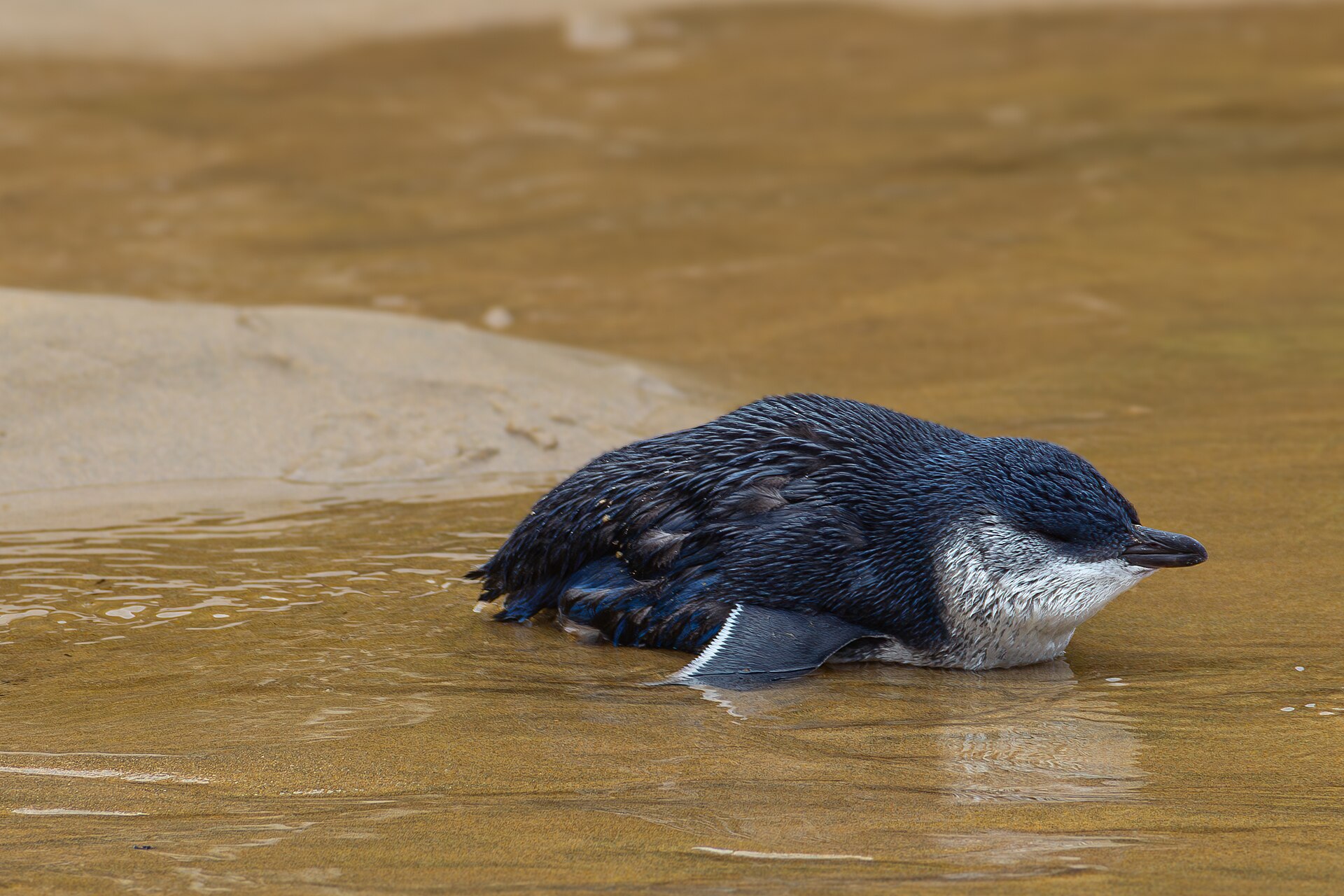
- Little penguin: platform, no flash, no picking up a bird “to help it across.” See little penguins.
- Platypus: existing bridge or high bank; sit; wait. See platypus.
- Death adder: identify, step back, long lens. See common death adder.
The journal essay How to watch Australian wildlife without stressing the animal is the companion argument. The FAQ is the short version for people who will not read an ethic twice.
Sound, drones, and the caption
Call-playback at a nest is baiting with audio. A drone over a whale, a penguin path, or a cliff-nesting seabird is often illegal and always a welfare question. Check Parks Australia and the state parks page before the rotor spins. “I stayed high” is not a defence.
Captions matter. A bioregion is usually enough. A nest tree is too much. “Wild koala, guaranteed, Tuesday 4pm” is a lie. “Education animal at a licensed venue” is honest when it is true. Zoo and Aquarium Association members publish welfare standards; they are not a ranked list, and they are not a wild population.
If you sell prints, say how the frame was made. If you pitch a guest post, include that sentence. This site will not run a baited quoll or a handled joey.
Night work has its own essay: night wildlife watching. The short version is red light, no den, no flash on penguins, and a slower drive home.
Selling the frame without selling the animal
If you licence a photograph, the caption should survive a ranger reading it. “Wild, unbaited, from the track, bioregion only” is a caption. “Secret den, guaranteed joey” is a breach waiting for a share. Guest photographers who want a byline on this domain should already be able to write that first caption. The guest-post page is the pitch. The ethics essay is the argument. This hub is the rule list you print before the trip.
One assignment sentence
Buy focal length, stay on the track, and walk away when behaviour changes. That is the assignment. Everything else on this page is commentary.
Questions
Questions people actually ask
Far enough that behaviour does not change. If a kangaroo stands, a koala climbs higher, or a penguin veers, you are too close. Step back.
Read the species before you pack the long lens
A koala on a thin energy budget and a death adder in leaf litter are not the same assignment. Biology first.