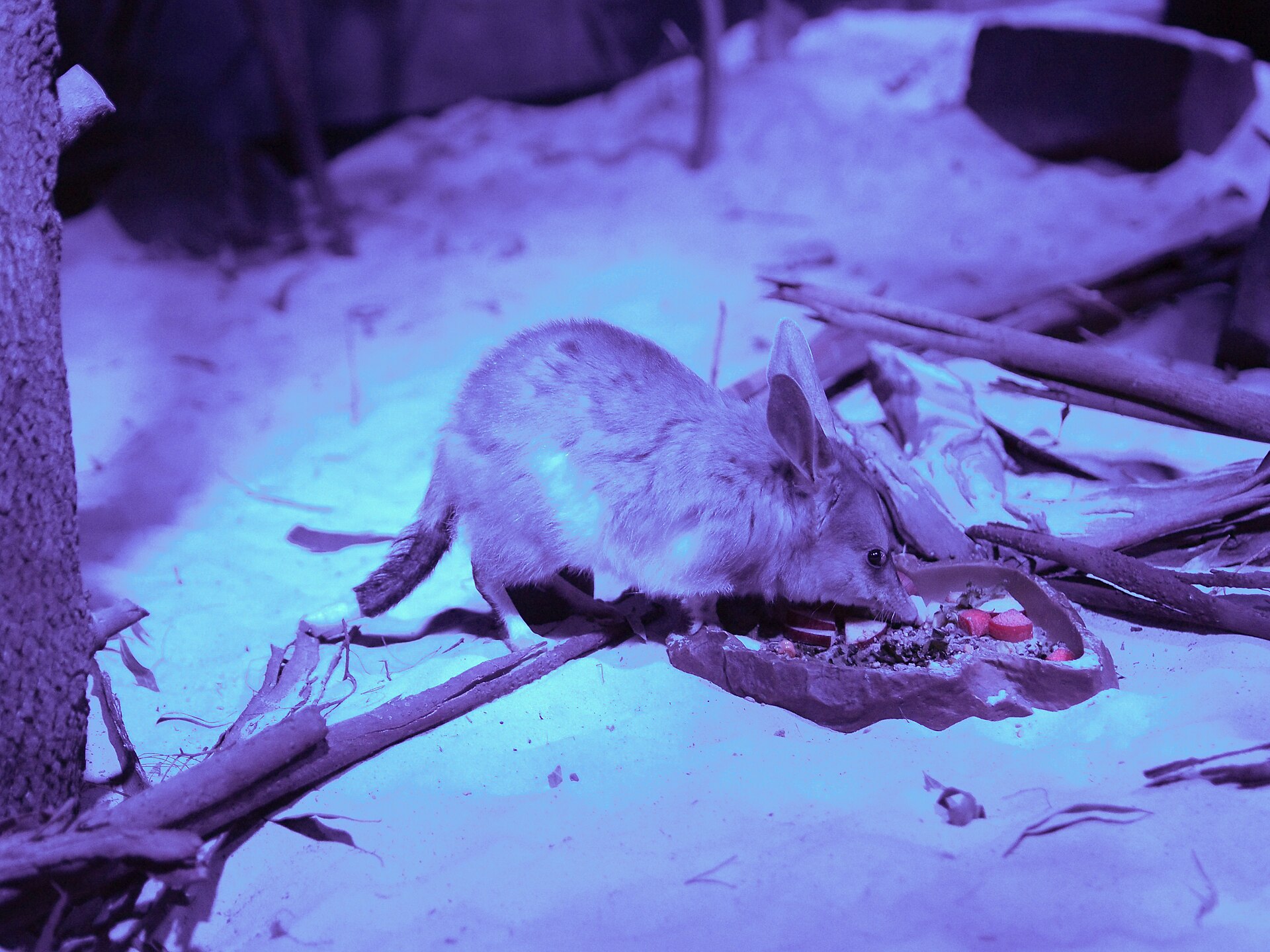
Recovery
Conservation is a public fact, not a mood
Listings change. Threats do not vanish because a species is still easy to photograph. Read the law, then keep your distance.
- National listing law
- EPBC
- Global Red List
- IUCN
- Devil facial tumour disease
- DFTD
- Last captive thylacine
- 1936
Australian wildlife conservation is the work of keeping native species and their habitats from disappearing — measured in law (the EPBC Act), in global assessments (the IUCN Red List), and in on-ground programs run by Traditional Owners, governments, and independent groups. This page is educational. It is not a fundraising pitch and not veterinary advice.
Definition
EPBC Act. Australia’s Environment Protection and Biodiversity Conservation Act 1999 — the national law that can list a species as Extinct, Extinct in the wild, Critically Endangered, Endangered, Vulnerable, or Conservation Dependent.
The threats that actually show up in assessments
Public recovery documents keep returning to the same cluster:
- Habitat loss and fragmentation — clearing, urban edges, and roads
- Introduced predators — especially foxes and cats
- Invasive species and disease — cane toads, Phytophthora, devil facial tumour disease
- Climate extremes — heatwaves, drought, and fire overlapping refuge
- Direct human behaviour — feeding, traffic, dogs, and disturbance at breeding sites
Historic pages on this domain discussed cane toads and disease. Those topics still belong under conservation, not under DIY “control tips.”
How to read a status line on this site
When a species page says a listing, treat it as orientation:
- Note the instrument (EPBC population vs whole species; IUCN global).
- Open the official page and confirm it has not been reassessed.
- Do not upgrade or downgrade the words to make a headline.
DCCEEW biodiversity and the IUCN Red List are the citations. The Atlas of Living Australia is the occurrence map.
What a visitor can do without making it worse
Support groups that publish science and land management — Australian Wildlife Conservancy is one independent example. Keep cats contained. Never feed. Drive like nocturnal mammals own the verge, because they do.
Injured or orphaned animals go to licensed carers, not to a hotel bathtub and not to this inbox.
Deep time is part of the argument
The Riversleigh fossil field is World Heritage because it records how Australian mammals became the fauna we still have — and the ones we do not. Conservation without deep time is just a press release. The journal essay on Riversleigh and marsupial deep time is the longer argument.
How the law actually talks
Australia uses more than one instrument. Mixing them is how headlines go wrong.
EPBC Act (national). The Environment Protection and Biodiversity Conservation Act 1999 can list a species or a particular population. The koala example is the one visitors meet first: the combined Queensland, New South Wales and Australian Capital Territory populations were listed as Endangered in 2022. Victoria and South Australia are assessed separately. Always open DCCEEW.
State and territory law. Taking, injuring, or keeping wild animals without a licence is illegal even when a species is not EPBC-listed. A “Least Concern” kangaroo is still not a pet.
IUCN Red List (global). A global assessment can disagree in wording with a national listing because the geography differs. Cite both. Do not pick the scarier word.
Parks and recovery programs. Parks Australia and state parks services manage places. Independent groups manage some fenced and island refuges. The Zoo and Aquarium Association coordinates cooperative breeding among licensed institutions. None of those is a visitor ranking of “best wildlife parks,” and none of them is this website.
Three endings, not three moods
The greater bilby is an unfinished recovery: collapsed across most of its former range, persisting in the inland and in managed refuges, used as an Easter emblem because chocolate campaigns raise money and attention. That is not the same as a guaranteed nocturnal tour.
The Tasmanian devil is an ongoing disease story. Devil facial tumour disease is a transmissible cancer. Insurance populations and published reintroductions are management decisions. Cite the programs for current maps.
The thylacine is a closed ending. The last captive animal died at Hobart’s Beaumaris Zoo on 7 September 1936. The IUCN lists the species as Extinct. Treat “sightings” as claims that need evidence, not as content.
Introduced animals are not a side note
Foxes and cats show up in recovery documents for bilbies, bandicoots, potoroos, and many small mammals. Rabbits rewrite understorey. Cane toads matter in the north for quolls and goannas. None of that is a DIY control guide. Do not relocate predators. Do not spread folklore baits. Support the programs that already publish methods.
Climate extremes — heatwaves, drought, and overlapping fire — turn habitat fragments into traps. A koala listing that names drought and heat is not being dramatic. It is reading the advice.
What a visitor can do without making it worse
- Keep pet cats contained, including at night.
- Never feed wild animals, including “just one oat” for a kangaroo.
- Stay on tracks. Dogs on leads or at home.
- Slow down at dusk. Wombats, pademelons, and kangaroos own the verge.
- Book official penguin and whale-watch venues when you want a managed experience.
- Support organisations that publish science and land management. Australian Wildlife Conservancy is one independent example; it is not the only one, and it is not a government agency.
- Leave injured animals to licensed carers.
Do not take a joey. Do not “rescue” a seal pup on a beach unless an agency asked you to keep people back. Do not publish a nest.
How to read a status line on a species page
When a guide on this site says a listing, treat it as a starting citation:
- Note the instrument and the geography.
- Open the official page the same day you cite it.
- Do not upgrade or downgrade the words.
The Atlas of Living Australia is the occurrence map, not a listing. A lot of dots can still be a declining population.
Deep time and the argument for not being casual
Riversleigh records Oligocene and Miocene rainforest mammals in what is now dry limestone country. The living fauna is a subset. The thylacine is the modern end of a carnivorous marsupial experiment that field documents in older forms. Conservation that forgets that timescale becomes a press release about a single celebrity animal.
This page will not invent a donation target, a live headcount, or a rescue outcome. It will send you to the instrument, the park, and the species guide.
What a listing is — and is not
| Compare | A listing | Not a listing |
|---|---|---|
| Meaning | A formal assessment against published criteria. | A feeling that an animal “seems rare this year.” |
| Geography | May apply to a population (koalas in QLD/NSW/ACT) rather than the whole species. | “Koalas are extinct” as a national sentence. |
| Action | Recovery plans, habitat protection, research, predator control. | Taking a joey home “to save it.” |
Questions
Questions people actually ask
Native wildlife is protected under state and territory law, and some species and places are also protected under the national EPBC Act. Taking, injuring, or keeping wild animals without a licence is illegal.
Recovery stories belong next to the species page
The greater bilby, the Tasmanian devil, and the thylacine are not three moods. They are three different endings — unfinished, ongoing, and closed.