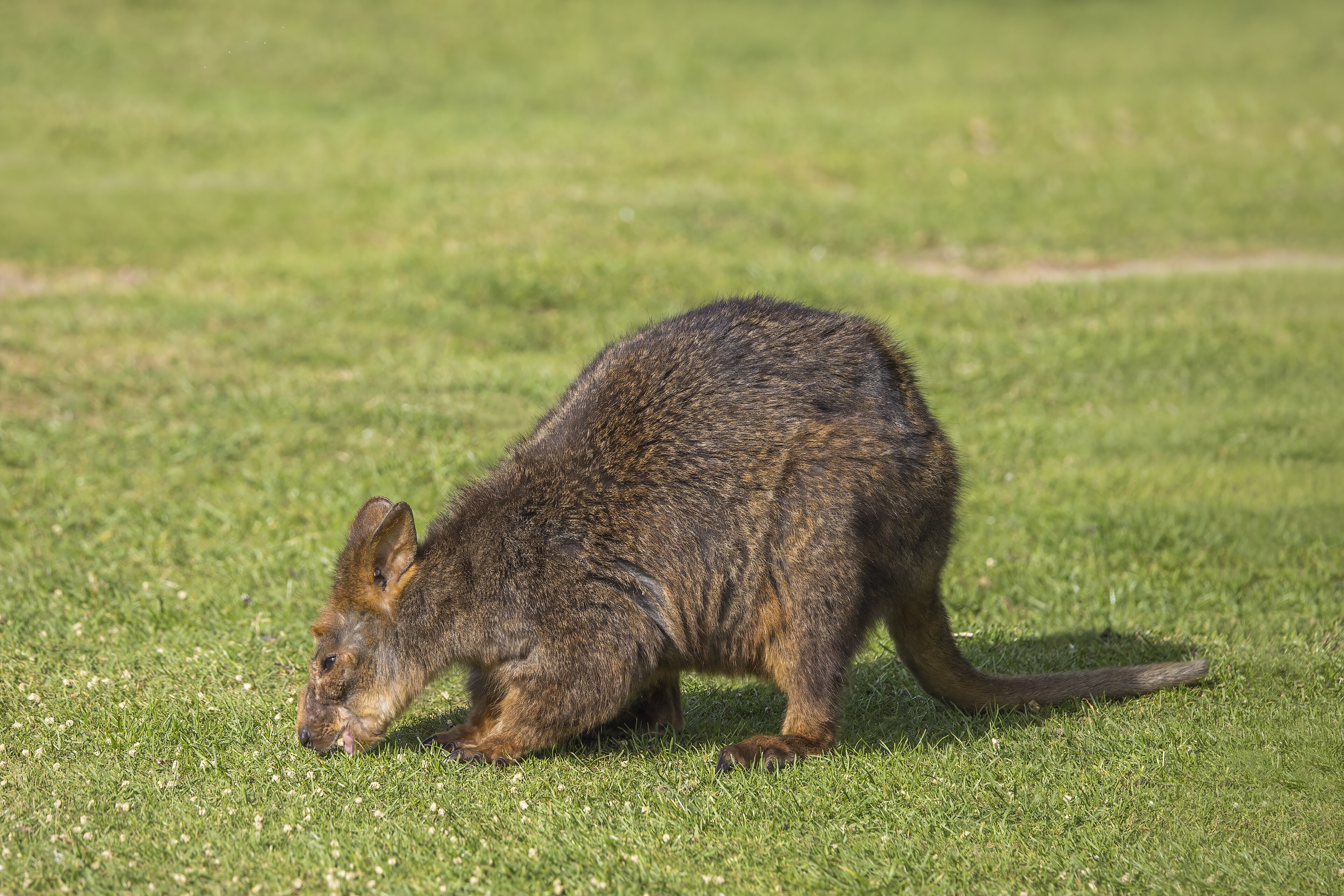
Marsupial
Pademelons — the small hoppers at the forest edge
Compact, often reddish, and easy to mistake for “a baby kangaroo.” They are their own animals.
- Genus
- Thylogale
- Typical habitat
- Forest edge
- When they graze
- Dusk
- Identification note
- Not a joey
Pademelons are small macropods in the genus Thylogale. They favour wet forest edges and thickets in eastern Australia, Tasmania, and New Guinea. The Tasmanian pademelon (Thylogale billardierii) is still locally abundant; mainland species are patchier. Historic /PADEMELONS.htm and /Pademelons.html redirect here.
Definition
Pademelon. A small, stocky wallaby of dense cover. The name comes from an Aboriginal language of the Sydney region (often given as badimaliyan).
Species you may meet
Red-necked pademelon (Thylogale thetis) — eastern mainland rainforests and wet sclerophyll.
Red-legged pademelon (Thylogale stigmatica) — north-eastern forests.
Tasmanian pademelon (Thylogale billardierii) — Tasmania; often the animal on the edge of a picnic ground at dusk.
Viewing
They freeze, then bolt into cover. Do not pursue into the ferns. Night driving on wet forest roads is when cars take them.
What a pademelon is
Pademelons (Thylogale) are small forest-edge macropods — kangaroo relatives that stay near cover. They are not joeys of a larger species. Historic /PADEMELONS.htm and /Pademelons.html 301 here. The kangaroos and their relatives hub is the family map; this page is the small wet-forest chapter.
Red-necked pademelon (Thylogale thetis) — eastern mainland rainforests and wet sclerophyll.
Red-legged pademelon (Thylogale stigmatica) — north-eastern forests.
Tasmanian pademelon (Thylogale billardierii) — Tasmania; often the animal on the edge of a picnic ground at dusk.
Check current IUCN and state listings per species. Do not copy a status from one Thylogale onto another.
Habitat and the road
They use the edge: rainforest, wet sclerophyll, tea-tree, and picnic lawns that back onto cover. That edge is also a road. Vehicle strike at dusk is ordinary, not exceptional. Slow down. Do not stop in a travel lane for a face.
Parks Tasmania and mainland state parks services write the local rules. Dogs on leads or at home. Do not pursue into ferns — you will not get a better photograph, and you will get a stressed animal and a tick.
Viewing
They freeze, then bolt. If you want the frame, use a longer lens from the track or the car. Do not feed a picnic-ground pademelon. Habituation is how animals end up on the bitumen.
Licensed venues may keep macropods for education. That is not a ranking of “best parks,” and it is not a wild guarantee. Pair this page with kangaroos when the question is the large hoppers, and with regions when the question is wet forest versus rangeland.
Picnic lawns and the fern wall
A Tasmanian picnic-ground pademelon is habituated, not tame. Bread still injures. Pursuit into ferns still stresses. The fern wall is the animal’s house. Night logging roads and tourist roads take more pademelons than any photograph is worth. Drive as if a small macropod will be on the crown of the road — because one will.
Three Thylogale and no joey shortcut
Red-necked, red-legged, and Tasmanian pademelons are not joeys of a grey kangaroo. They are small forest-edge macropods with their own listings. Copying a status from one Thylogale onto another is how citations rot. Use the Atlas of Living Australia, then the instrument. Use the fern wall as the house you do not enter.
Forest-edge, not rangeland
If you are in red-kangaroo country you are in the wrong essay. Pademelons are wet-forest and picnic-edge animals. The hop is shared. The country is not. Slow down on wet-forest roads. Do not pursue the freeze into ferns. Do not feed the picnic-ground animal. Three Thylogale, three listings, one fern wall.
Wet-forest roads after rain
The crown of the road is a pademelon path after rain. Drive as if the next crest hides a freeze. Picnic lawns hide a habituated animal that still should not be fed. Ferns hide the house. Three species, one edge, no joey shortcut. Historic /PADEMELONS.htm 301s here.
Last line
Small wet-forest macropods, not joeys, three Thylogale, fern wall, slow wet-forest roads, no bread on the picnic lawn. /PADEMELONS.htm 301s here. Cite Thylogale, then slow down on the wet-forest road. Verify the Thylogale listing before you cite it.
Questions
Questions people actually ask
A pademelon is a small, compact forest macropod (genus Thylogale) — not a kangaroo joey. Three species occur in Australia; they graze forest edges at dusk.