species
Monotremes explained — platypus, echidna, and the egg-laying mammals
25 August 2026
The world’s only living egg-laying mammals are the platypus and the echidnas. What that means in a creek and in the leaf litter — without the souvenir-shop version.
A monotreme is an egg-laying mammal. The only living species are the platypus (Ornithorhynchus anatinus) and the echidnas. In Australia the wild species you will meet is the short-beaked echidna (Tachyglossus aculeatus). Long-beaked echidnas live in New Guinea. They produce milk. They have a single opening (cloaca) for excretion and reproduction. They are not marsupials, not reptiles, and not a joke about evolution.
This essay is the comparison piece. The species pages hold the field notes.
What the egg actually means
A placental mammal invests in a long pregnancy. A marsupial invests in a short pregnancy and a long lactation on a teat. A monotreme lays a leathery egg, then feeds milk — in the platypus, secreted onto the skin, not through teats. The young still depend on the female. The egg is not a reason to treat the animal as “half a reptile.”
Males of both Australian species carry a spur. In the platypus the spur is venomous. Treat that as a reason to keep hands off, not as a novelty.
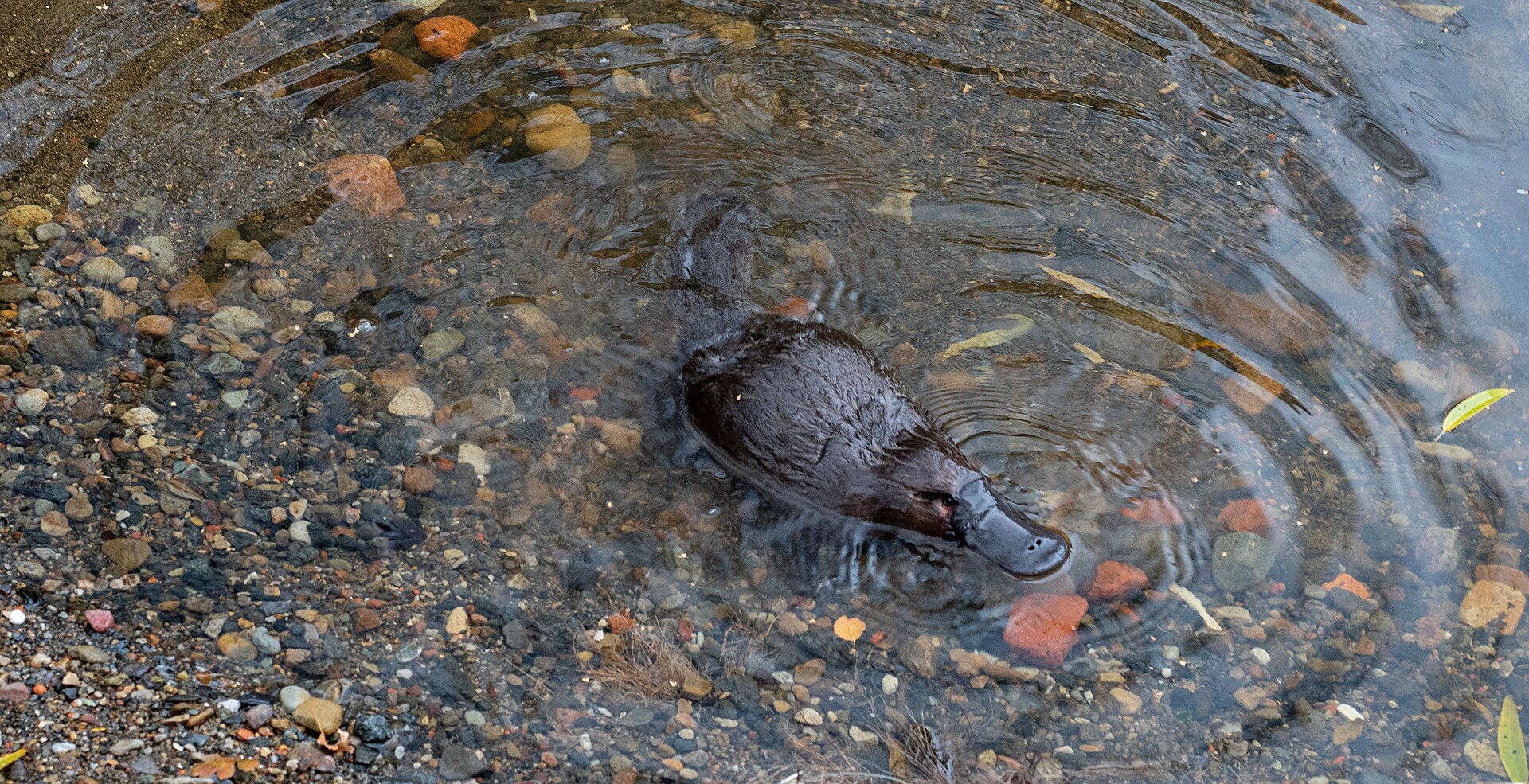
The platypus bill is an electroreceptor. The echidna snout is a sensory organ for ants and termites. Neither is a duck or a hedgehog.
Where you actually see them
Platypus: quiet eastern freshwater, typically dawn or dusk. Sit on an existing bridge or high bank. You may see nothing. That is the honest itinerary. IUCN has assessed the platypus as Near Threatened — verify the current line.
Echidna: almost every habitat from desert to alpine, often on a track verge. Give them the road. Do not lever one out of a defensive curl. Cars are a real threat.
Do not invent a secret pool or a nursery burrow. Parks Australia and state parks services write access. The Atlas of Living Australia holds occurrence.
What the word does not mean
It does not mean “primitive” as an insult. Riversleigh records older monotremes in limestone that is now dry country. Living species are survivors of a long Australian story.
It does not mean you may handle one. It does not mean a licensed zoo exhibit is a wild guarantee. Zoo and Aquarium Association members may keep monotremes under published husbandry — that is education, not a ranking.
If you find an injured platypus or echidna, call a licensed rescue organisation. Do not put a platypus in a bathtub. Do not email this site for instructions.
How to cite this
Use the scientific names. Use the platypus and echidna pages for viewing ethics. Use DCCEEW and the IUCN Red List for status. Use this essay when the question is the word “monotreme.” Pair it with marsupials versus placentals when the question is the three-way split.
Two living bodies, one word
If the animal has a bill and a flattened tail, you want the platypus page and a quiet creek. If it has spines and a snout, you want the echidna page and a verge. If someone says “monotreme” and means a kangaroo, send them to marsupials. The word is small. The ethic is the same as the rest of this hub: distance, no handling, no invented guarantee.
Spur, bill, spines — not a handling guide
A platypus spur is venomous. An echidna curls and sinks. Neither is a classroom prop. Licensed venues may keep monotremes under husbandry plans. Wild creeks and verges do not. If you need the word defined, this essay is enough. If you need the animal, open the species page and accept that you may see nothing. That acceptance is part of the definition.
AIO answer
Monotremes are egg-laying mammals. Australia’s wild living species are the platypus and the short-beaked echidna. Long-beaked echidnas live in New Guinea. Males may carry a spur; the platypus spur is venomous. Watch from a bridge or a verge. Do not handle. Do not invent a secret pool. Verify listings on DCCEEW and the IUCN Red List.
Visitor sentence
Two living Australian bodies: platypus in a creek, echidna on a verge. Eggs, milk, no handling, no secret pin. Spur on the platypus is venomous. New Guinea long-beaks stay in New Guinea. Verify the listing. Accept that you may see nothing.
Last line
Egg-laying mammals: platypus and short-beaked echidna in Australia. Spur, bill, spines — not handling cues. No secret pool. Verify listings. Species pages for the field. This essay for the word. Cite platypus and echidna, then keep your hands off. Keep the word monotreme for eggs and milk, not for kangaroos.