Marsupial
The wombat of the southern dry country
Hairy nose, warrens in open plains, and a different conservation story from the forest wombat visitors already know.
- Hairy-nosed genus
- Lasiorhinus
- Social burrows
- Warrens
- Core range
- Arid south
- Legacy path redirected
- .htm
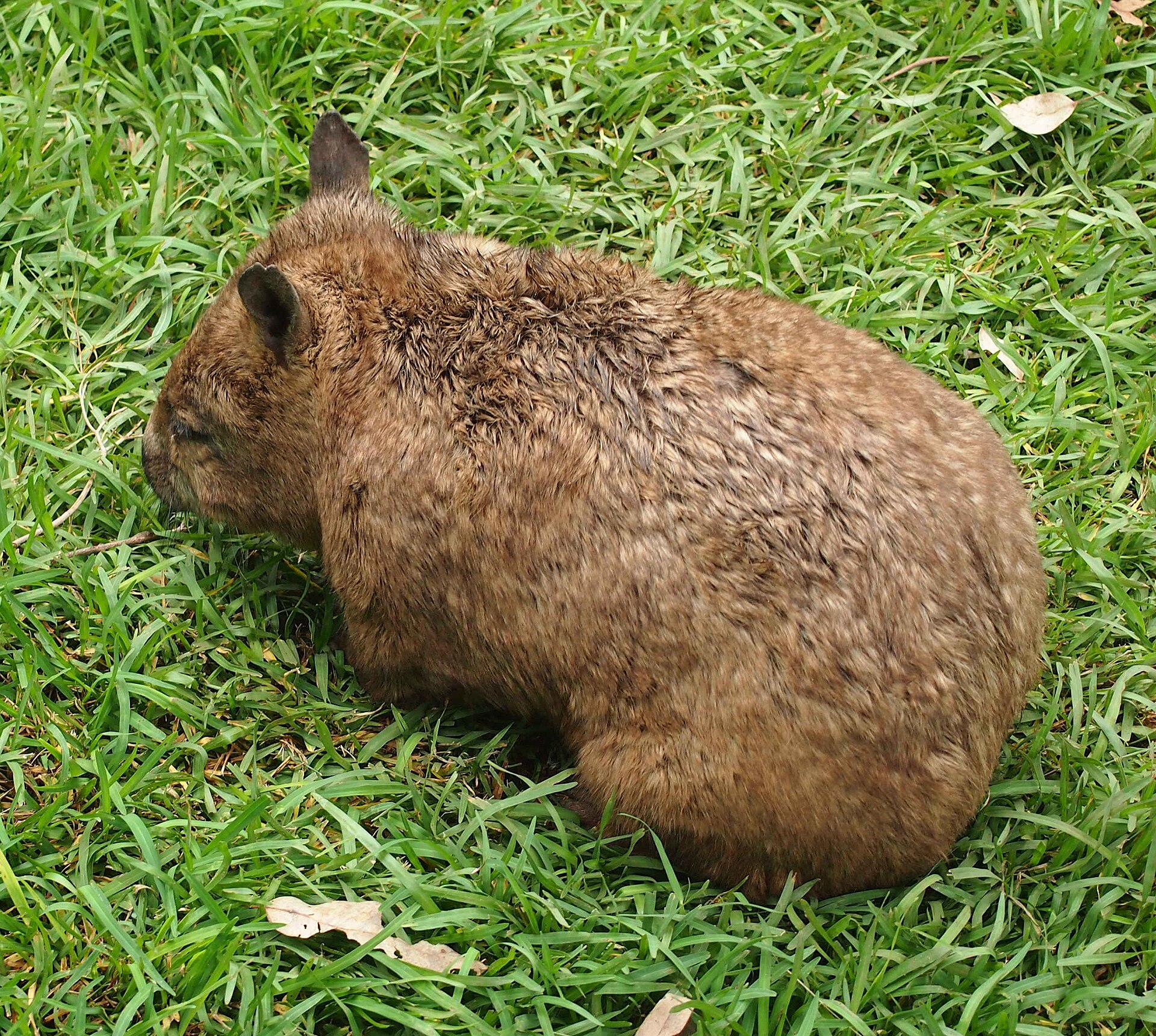
The southern hairy-nosed wombat (Lasiorhinus latifrons) lives in arid and semi-arid southern Australia, especially South Australia. It occupies warren systems in open country. It is not the common wombat of Tasmania’s forests. Historic /SOUTHERN_HAIRY-NOSED_WOMBAT.htm now redirects here.
Definition
Warren. A shared burrow system used by hairy-nosed wombats, unlike the more solitary burrows typical of common wombats.
Range and threats
Southern hairy-nosed wombats persist in pockets of South Australia and nearby dry country. Drought, mange, and habitat change appear in public assessments. Treat any exact headcount as something to verify with the state department.
Viewing
This is not a guaranteed roadside animal. If you are in warren country, stay out of the holes, keep vehicles on formed tracks, and do not walk the roof of a warren for a better angle. The ground is the house.
A different wombat, a different country
The southern hairy-nosed wombat (Lasiorhinus latifrons) is a semi-arid burrower of South Australia and nearby dry country — not the bare-nosed common wombat of Tasmania and the south-east forests. Soft facial hair, a broader nose, and warrens that can undermine a track if you drive off the formation. Historic /SOUTHERN_HAIRY-NOSED_WOMBAT.htm 301s here.
Drought, mange, and habitat change appear in public assessments. Treat any exact headcount as something to verify with the South Australian department and the IUCN Red List. This page will not invent a live census.
Viewing
There is no guaranteed roadside animal. If you are in warren country, stay out of the holes, keep vehicles on formed tracks, and do not walk the roof of a warren for a better angle. The ground is the house. Dogs stay leashed or at home.
State parks and reserve notes win. Parks Australia is not the usual manager here; South Australian parks and private pastoral country are. Do not invent a sanctuary ranking.
Mange is a welfare issue in some wombat populations. Report sick animals to licensed carers. Do not treat them yourself.
Pair this page with regions (arid and semi-arid) and conservation. Cube scats and a warren are field signs, not a reason to excavate.
Warrens, drought, and the pastoral verge
A warren can run under a fence and a track. Driving the roof collapses a room. Drought concentrates animals on the remaining forage — including a verge you wanted for a photograph. Stay on formed tracks. South Australian parks and pastoral rules win. Do not import a Tasmanian common-wombat itinerary onto this country.
Not the northern hairy-nosed
The northern hairy-nosed wombat is a separate, critically endangered Queensland recovery story. Do not copy that listing onto Lasiorhinus latifrons. Do not copy a Tasmanian common-wombat walk onto a South Australian warren. Three wombats, three countries, three instruments. This page is the semi-arid south.
Warren roofs collapse
The house is underground. The roof is the track you should not leave. Drought pulls animals to the remaining forage. Mange is report-only. The northern hairy-nosed is a different species and a different listing. South Australian parks and pastoral rules win. No Tasmanian itinerary. No live census.
Formed tracks only
The warren is the house. The formed track is the visit. Historic /SOUTHERN_HAIRY-NOSED_WOMBAT.htm 301s here. Drought, mange, pastoral verge — report, do not excavate. Not the northern hairy-nosed. Not the Tasmanian common wombat. South Australian rules win. No live census on this page.
Last line
Lasiorhinus latifrons, semi-arid South Australia, formed tracks only, warren roofs collapse, not the northern hairy-nosed, not the Tasmanian common wombat. /SOUTHERN_HAIRY-NOSED_WOMBAT.htm 301s here. Drought concentrates animals on remaining forage. Mange is report-only. No live census. Pastoral and parks rules win. Cube scats are signs, not souvenirs. Stay out of holes.
Cite the arid wombat
Lasiorhinus latifrons. Formed tracks. No warren roofs. Not the northern species. Historic /SOUTHERN_HAIRY-NOSED_WOMBAT.htm lands here. Report mange; do not treat it. Stay out of holes. Verify Lasiorhinus latifrons on DCCEEW and the Red List the day you cite it. Stay on the formed track even when the warren looks empty.
Questions
Questions people actually ask
Hairy-nosed wombats have fur on the nose, softer-looking faces, and live in drier, more open country in warren systems. Common wombats are bare-nosed and typical of wetter south-eastern forests and Tasmania.