Reptile
The blue tongue is a warning, not an invitation
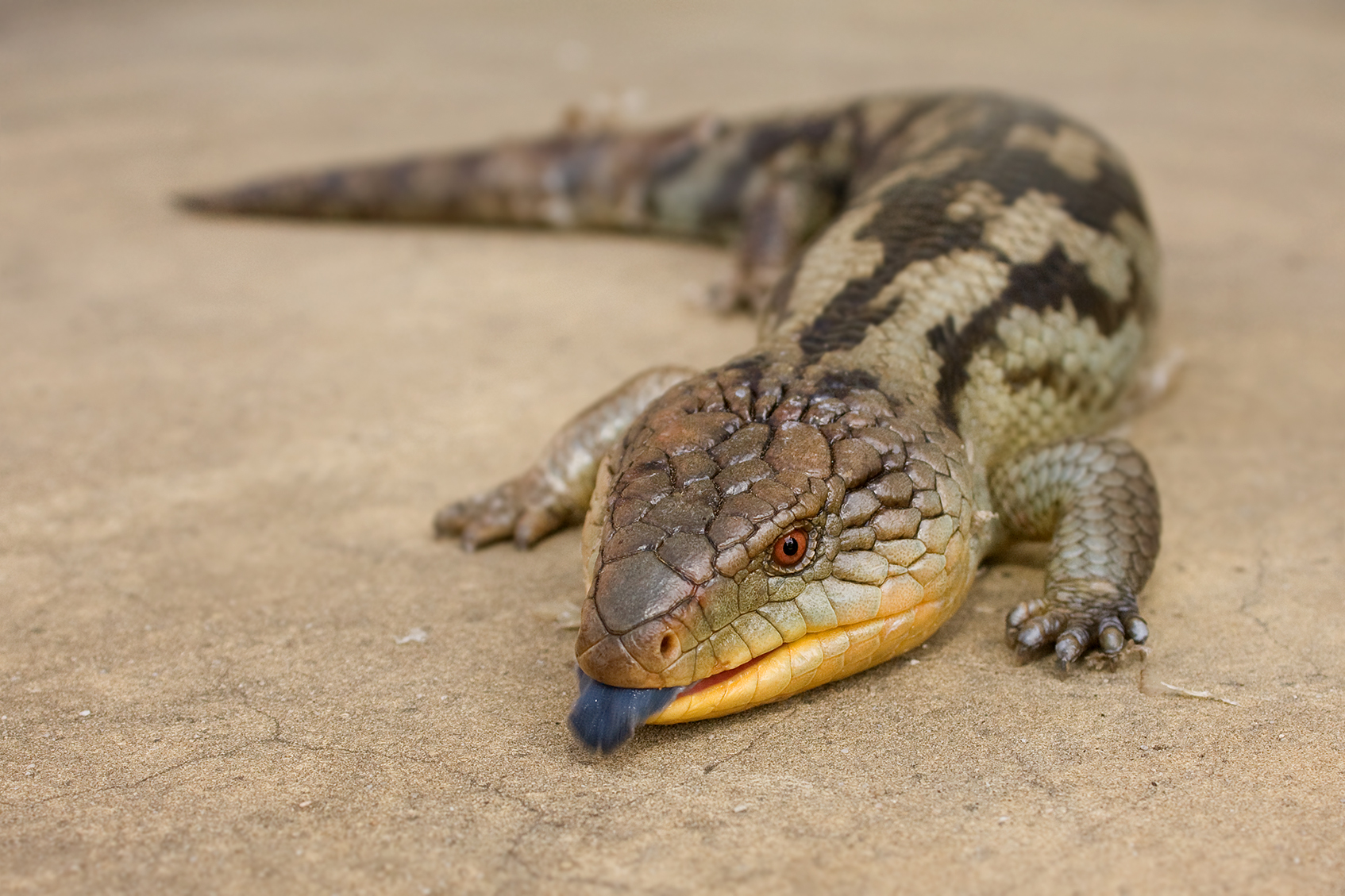
Large, omnivorous skinks of gardens and woodland. They hiss and flash the tongue when they would like you to leave.
- Genus
- Tiliqua
- Reproduction
- Live-bearing
- Snails, flowers, beetles
- Omnivore
- Frequent urban habitat
- Garden
Blue-tongued skinks are large omnivorous lizards in the genus Tiliqua. The eastern blue-tongue (Tiliqua scincoides) is the familiar species of eastern gardens and woodland. They are live-bearers, not egg-scatterers. Historic /BLUE-TONGUED_SKINKS.htm and /Blue-tongued_Skinks.html redirect here.
Definition
Blue-tongued skink. A member of Tiliqua — stout skinks that display a blue tongue when threatened. Includes the eastern blue-tongue and the shingleback.
Identification
A thick body, short legs, and a broad head. The eastern blue-tongue has smoother scales and a longer tail than the shingleback. Several other Tiliqua species occur across Australia — do not assume every blue tongue is T. scincoides.
Viewing
They use compost, woodheaps, and long grass. If you are turning timber, look first. Do not keep a wild one as a pet; licensed keepers exist under state law. Cats and dogs injure them. Snail bait injures them.
A skink, not a snake, not a shingleback
Blue-tongued skinks (Tiliqua) are large Australian skinks. A thick body, short legs, and a broad head. The eastern blue-tongue (Tiliqua scincoides) has smoother scales and a longer tail than the shingleback (Tiliqua rugosa). Several other Tiliqua species occur across Australia — do not assume every blue tongue is T. scincoides. Historic /BLUE-TONGUED_SKINKS.htm 301s here.
They are not venomous in the sense visitors mean. They will hiss, inflate, and show the blue tongue. That is a bluff, not a reason to pick one up. Hands never — jaws are still a bite.
Viewing and the backyard
Compost, woodheaps, long grass, and suburban gardens. If you are turning timber, look first. Cats and dogs injure them. Snail bait injures them. Do not keep a wild one as a pet. Licensed keepers exist under state law; this site does not issue permits and will not tell you how to hide an animal.
Parks and state parks rules apply in reserves. On a track, step around. On a road, slow down. Do not move a lizard into your car “to show the kids.”
Pair with the common death adder page so identification stays honest: a thick, banded elapid is not a skink. Pair with photography and the FAQ. Check current IUCN lines per species if you need a status word.
Compost, kids, and the difference from a death adder
A blue-tongue in a compost heap is doing pest control on snails and beetles. Teach children to look, not to grab. Teach them that a thick, banded snake in litter might be a death adder. If you cannot tell, you do not pick it up. You take a photograph from a step back and you leave. State licensed keepers exist; wild collection does not become legal because the animal walked into a garage.
Other Tiliqua and the garden myth
Western blue-tongues, blotched blue-tongues, and northern species are not T. scincoides. A garden myth that “all blue-tongues are safe to handle” is how children get bitten and how wild animals get collected. Leave the tongue display as a photograph from a step back. Snail bait is still a poison. Cats are still a predator. Licensed keepers are still the only legal path to a captive animal.
What this page will not become
It will not become a care sheet. UV, calcium, and enclosure size belong with licensed keepers and veterinarians. It will not become a ranking of reptile parks. It will become, again, a garden identification: thick skink, blue tongue, not a death adder, not a pet from the woodheap, snail bait is poison, cats are predators, photograph from a step back.
Compost is habitat
Leave a messy corner. Look before you turn timber. Keep the snail bait off the soil. Keep the cat inside. Photograph the blue tongue from a step back. That is backyard conservation for Tiliqua without a permit and without a care sheet. Historic /BLUE-TONGUED_SKINKS.htm 301s here so the magazine path still works.
Last line
Thick skink, blue tongue, not an adder, not a pet from the heap, snail bait is poison, photograph from a step back. /BLUE-TONGUED_SKINKS.htm 301s here.
Questions
Questions people actually ask
No. Blue-tongued skinks (Tiliqua) are not venomous. They bluff with an open blue mouth. The common death adder is the sit-and-wait elapid people confuse with “any fat snake in the litter.” They can bite hard; leave them alone.