Extinct
The thylacine is extinct — the date is not a rumour
Last captive death: 7 September 1936, Beaumaris Zoo, Hobart. IUCN: Extinct. Curiosity is allowed. Resurrection headlines are not biology.
- Last captive death
- 1936
- IUCN status
- Extinct
- Last refuge
- Tasmania
- Documented pressure
- Bounties
The thylacine (Thylacinus cynocephalus), also called the Tasmanian tiger or Tasmanian wolf, is an extinct carnivorous marsupial. The last captive individual died at Hobart’s Beaumaris Zoo on 7 September 1936. The IUCN lists the species as Extinct. Historic /THYLACINE.htm redirects here.
Definition
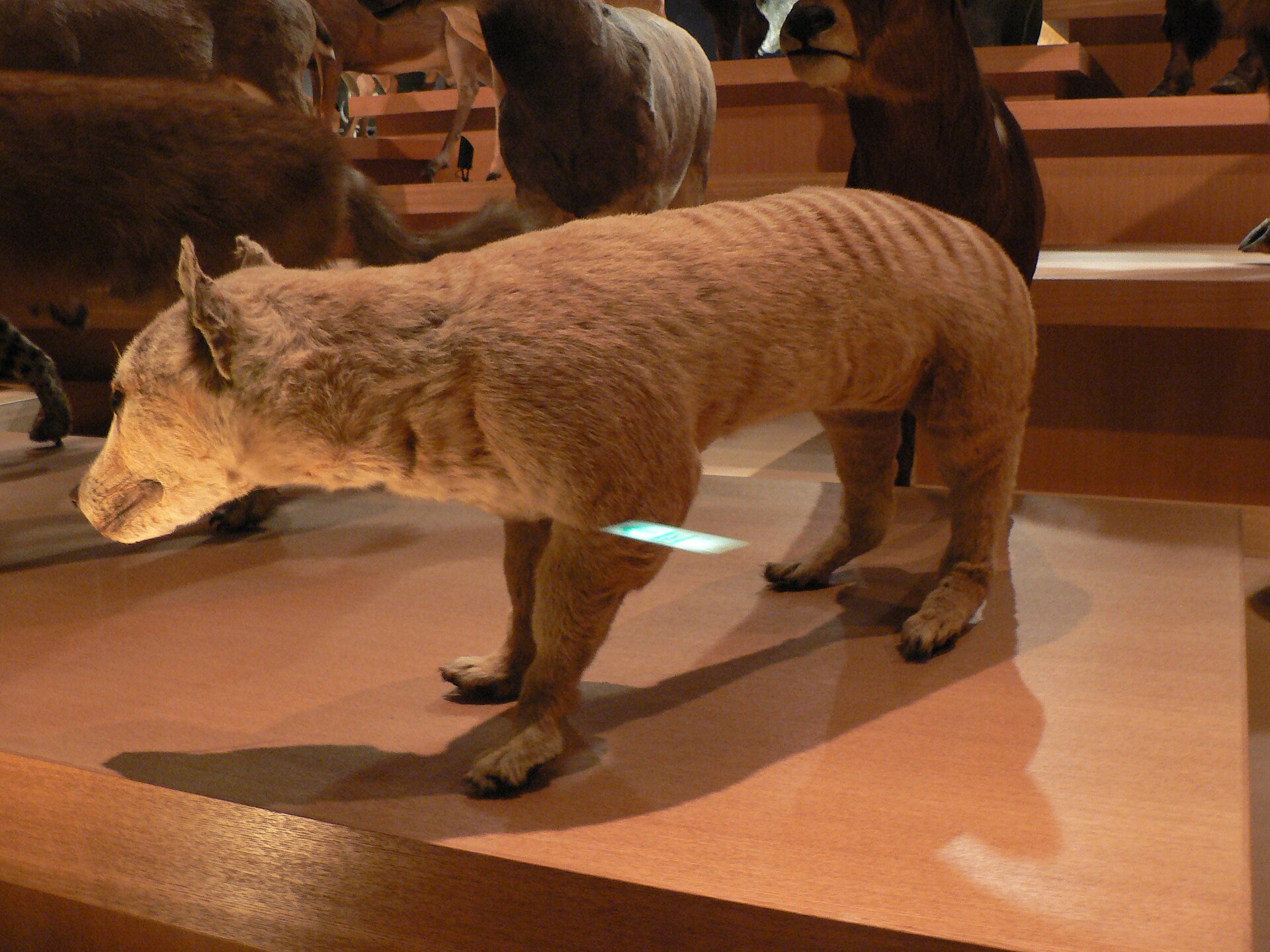
Thylacine. Thylacinus cynocephalus — a striped, dog-like marsupial predator that survived into modern times only in Tasmania.
What it was
A tapering, striped marsupial about the size of a large dog, with a stiff tail and a huge gape. It was not a wolf and not a big cat. It was the largest modern marsupial carnivore.
Why it is gone
Hunting and bounties, habitat change after European colonisation, and competition with dogs are the documented pressures. Disease has been hypothesised; do not treat a single cause as settled if the paper you are citing does not.
National Threatened Species Day in Australia is marked on 7 September in memory of that last captive animal. Memory is not the same as a living population.
If you came from a “is it still out there?” search: start with the museum record, then the IUCN account, then be wary of footage that never comes with a specimen.
Names, paths, and why the long slug is live
Thylacinus cynocephalus is the scientific name. “Tasmanian tiger” and “Tasmanian wolf” are historic English names that mislead: it was a marsupial, not a felid or a canid. The live URL is /thylacinus-cynocephalus-tasmanian-tiger/ because that is the historic ranking slug. /thylacine/, /THYLACINE.htm, and /Thylacine.html 301 here.
What it was
A tapering, striped marsupial about the size of a large dog, with a stiff tail and a huge gape. It was the largest modern marsupial carnivore. Museum skins and photographs are the evidence. Riversleigh records older carnivorous marsupials; this species is the recent end of that experiment, not a cryptid.
The last captive animal died at Hobart’s Beaumaris Zoo on 7 September 1936. National Threatened Species Day in Australia is marked on that date in memory. Memory is not a living population. The IUCN lists the species as Extinct. Open the Red List if you need the account.
Why it is gone
Hunting and bounties, habitat change after European colonisation, and competition with dogs are the documented pressures. Disease has been hypothesised; do not treat a single cause as settled if the paper you are citing does not. This page will not invent a new primary cause for a headline.
“Sightings”
Start with the museum record, then the IUCN account, then be wary of footage that never comes with a specimen, a location that can be checked, or a researcher who will put a name on it. This site will not launder a blurry still into a rediscovery. If you have a genuine specimen, you want a museum, not a comment thread.
Pair this page with the Tasmanian devil (the largest living carnivorous marsupial), carnivorous marsupials, and conservation. The living ethic on those pages still applies to other animals. This page is a closed ending.
Museums, footage, and the burden of proof
Skins, photographs, and the 1936 date are the record. Footage without a specimen is a claim. This page will not host a gallery of maybes. If you have a body, you have a museum problem. If you have a story, you have a story. Pair the closed ending with the living devil and with Riversleigh so deep time and last century stay in one argument.
Threatened Species Day is memory
7 September is a memorial date, not a season when the animal returns. Use it to read the conservation hub and the living devil page. Do not use it to launch a hunt. The long live slug exists so historic links still resolve. The animal does not.
Questions
Questions people actually ask
The thylacine (Thylacinus cynocephalus) was hunted to extinction. Bounties, habitat change, and a small island population finished a species that once lived on the mainland too. The last captive animal died in Hobart on 7 September 1936. The IUCN lists it Extinct.