Marsupial
Australia’s largest living marsupial carnivore — and a cancer epidemic
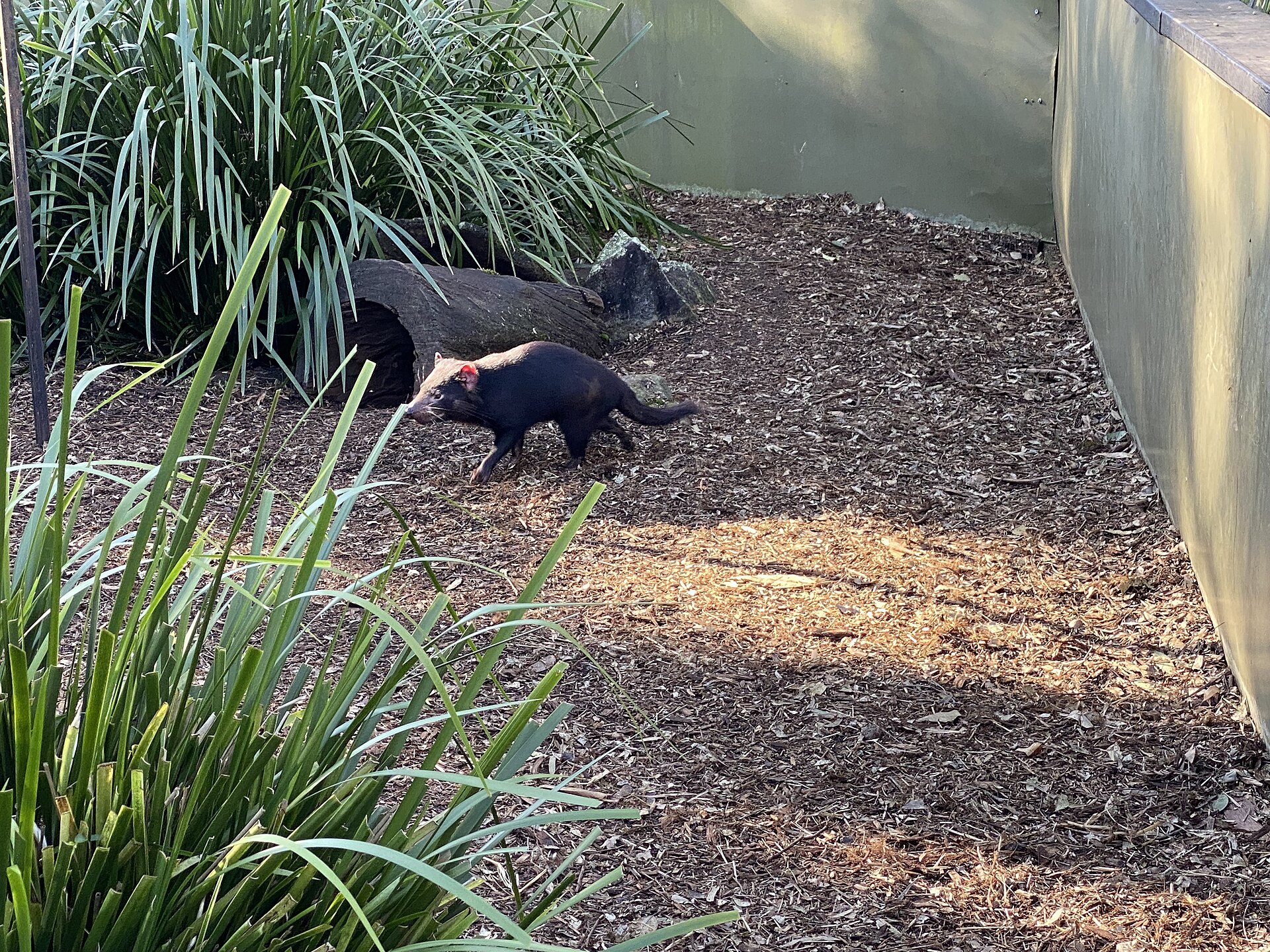
Devils scavenge and hunt. DFTD spread across Tasmania after the mid-1990s. The listing is Endangered. The animal is not a cartoon.
- EPBC / IUCN
- Endangered
- DFTD first observed
- 1990s
- Wild stronghold
- Tasmania
- Ecological role
- Scavenger
The Tasmanian devil (Sarcophilus harrisii) is an Endangered carnivorous marsupial now confined as a wild population to Tasmania (with conservation introductions elsewhere). Devil facial tumour disease, first observed in the mid-1990s, is a transmissible cancer that drove a severe decline. Historic /TASMANIAN_DEVIL.htm redirects here.
Definition
DFTD. Devil facial tumour disease — a transmissible cancer spread by biting, documented from the mid-1990s in Tasmania. It is a pathogen-like cell line, not a mood.
Biology
A black, heavy-headed scavenger with a wide gape and a scream that tourists remember. Devils eat carrion and live prey. They bite in social feeding — which is how DFTD cells spread.
The old vigilance-and-risk paper path on this domain now points here: sympatric marsupial carnivores (devils, quolls, historically thylacines) still matter to how we read Tasmanian food webs.
Viewing and insurance populations
Do not invent a “devil spotlight tour” time. If you visit a licensed park, you are looking at an education animal, not a wild hunt. Conservation introductions to islands and fenced sites are management decisions published by the programs that run them — cite those programs, not this paragraph, for current maps.
Biology without the souvenir scream
A black, heavy-headed scavenger with a wide gape and a scream tourists remember. Devils eat carrion and live prey. They bite in social feeding — which is how devil facial tumour disease (DFTD) cells spread. DFTD is a transmissible cancer, not a metaphor and not a visitor diagnosis from a car park.
Historic /TASMANIAN_DEVIL.htm 301s here. The old vigilance-and-risk paper path on this domain now points at carnivorous marsupials and this page: sympatric marsupial carnivores still matter to Tasmanian food webs.
The thylacine is the extinct larger carnivore. Do not conflate stripes with a scream.
Listing and insurance populations
The Tasmanian devil is listed Endangered under Australian law and on the IUCN Red List — verify the current wording on DCCEEW and the Red List before you cite. Insurance populations and published reintroductions (including some islands and fenced sites) are management decisions. Cite the programs for current maps. This page will not invent a live prevalence percentage or a tour clock.
Viewing
Night spotlighting of wild devils is not a casual visitor technique. It stresses animals and is regulated in many parks. Parks Tasmania publishes access. Licensed wildlife parks and Zoo and Aquarium Association members keep education animals under published welfare standards — not a ranking of “best devil parks,” and not a wild hunt.
If you walk a Tasmanian track at dusk, you may hear one and see nothing. Stay on the track. Do not follow a scream into the bush. Do not publish a den.
If you find an injured devil, call a licensed rescue organisation. Do not attempt to handle it.
Pair this page with conservation and carnivorous marsupials. The journal is for arguments; this page is for the animal.
Insurance maps and the scream in the dark
Insurance populations exist because DFTD made a mainland-style extinction thinkable. Those maps change. Cite the program. A scream in the dark on a Tasmanian track is not a booking confirmation. It is a reason to stay on the path and to keep the dog in the car. The carnivorous marsupials hub keeps the devil next to quolls and the thylacine so the order stays honest.
DFTD is not a visitor diagnosis
A lumpy face on a night animal is not yours to diagnose. DFTD is a research and management literature. Photograph from a distance if you are already on a legal track, then leave. Report a sick animal to the program or Parks Tasmania if they ask for sightings — not to a Facebook group that wants the location. Do not handle a devil. Ever.
Questions
Questions people actually ask
Devil facial tumour disease (DFTD), a transmissible cancer first observed in the mid-1990s, drove a severe decline. The species is listed Endangered under the EPBC Act and on the IUCN Red List — re-check the current instrument before you cite it.