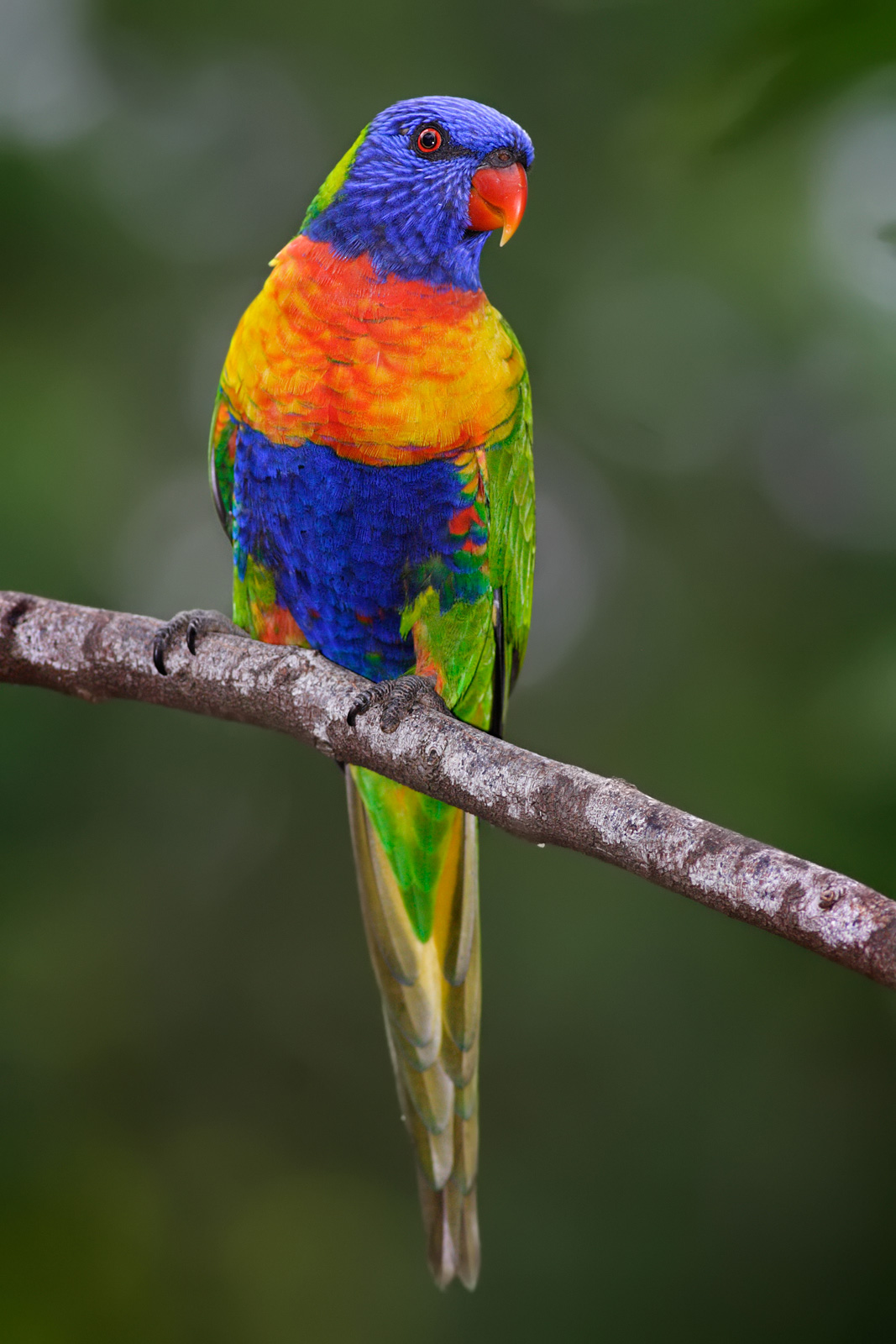
Bird
A brush-tongued parrot that turned cities into an aviary
Nectar, pollen, and a scream at dusk. Historic /Rainbow_Lorikeet.html redirects here.
- Genus
- Trichoglossus
- Natural diet
- Nectar
- Now common on the coast
- Urban
- Feeding rule
- No bread
The rainbow lorikeet (Trichoglossus moluccanus) is a small, brilliantly coloured parrot of eastern Australia. It feeds on nectar and pollen with a brush-tipped tongue and has become abundant in many coastal cities. It is still a wild bird. Bread and seed trays make sick flocks, not friends.
Definition
Lorikeet. A parrot specialised for nectar and pollen, with a brush-tipped tongue. Rainbow lorikeets are the familiar east-coast example.
Identification
Blue head, orange-red breast, green wings — unmistakable in good light. Taxonomy has split and lumped coconut and rainbow lorikeets; if you cite a paper, use the name that paper uses and note the year.
Viewing
Figs, eucalypts in flower, and suburban bottlebrush. They are loud at roost. That is not a licence to throw food from a balcony. Invasive rainbow lorikeets outside their natural range (parts of Western Australia and overseas) are a separate management story — cite the local authority.
A nectar parrot, not a pet on a feeder
The rainbow lorikeet (Trichoglossus moluccanus in current eastern usage — taxonomy has split and lumped coconut and rainbow lorikeets; if you cite a paper, use the name that paper uses and note the year) is a brush-tongued parrot of the east and north. Blue head, orange-red breast, green wings — unmistakable in good light. Historic /rainbow.htm, /features/rainbow.htm, and /Rainbow_Lorikeet.html 301 here.
They feed on nectar, pollen, and fruit. Locally indigenous banksias, grevilleas, and eucalypts are the native flora story. A balcony feeder of bread or sugar mix is a husbandry argument for aviary birds, not a picnic activity. It creates noise, droppings, and birds that treat people as vending machines.
Range and the invasive conversation
Natural range is eastern and northern Australia. Established populations outside that range — including parts of Western Australia — are a management story for the local authority. This page will not invent a control method. Cite the state department.
Check the current IUCN line if you need a global status. Most visitors are looking at an abundant urban bird, not a listing emergency. That abundance is not a licence to keep one without a permit.
Viewing
Figs, flowering eucalypts, and suburban bottlebrush. They are loud at roost. Use the photography ethic: no playback at a nest hollow, no flash into a cavity, no ranking of “best lorikeet parks.”
Pair with willie wagtails and pied butcherbird when the question is backyard birds, and with the birds field notes essay. The FAQ inherits the Ask Dr Ann bird hash.
Roosts, feeders, and Western Australia
A suburban roost is loud. That is not a licence to haze a tree at night. A feeder of bread or honey creates a queue and a mess. In Western Australia, rainbow lorikeets outside their natural range are a declared management problem — cite the state department, do not invent a backyard cull. On the east coast they are an abundant native. Both sentences can be true.
Coconut lorikeets and the year on the paper
If you cite taxonomy, cite the year. Coconut and rainbow lorikeets have been lumped and split. The visitor still sees a blue-headed nectar parrot on an eastern fig. The manager in Western Australia still sees an invasive population. Both can be true. Neither allows a bread feeder. Hollows for nests are still habitat — do not playback at a cavity.
Feeder, roost, invasive range
Three conversations. East-coast abundance on figs. Balcony feeders that should not exist. Western Australian management outside natural range. Cite the local authority for the third. Empty the feeder for the second. Enjoy the noise for the first without haze or playback. Taxonomy year on the paper if you need the name.
Figs in flower are the assignment
You do not need a feeder. You need a flowering tree and a willingness to enjoy noise. Historic /rainbow.htm 301s here. Western Australian managers need their own department page. East-coast visitors need empty hands. Taxonomy needs a year on the paper. Hollows need to stay in the tree.
Last line
Flowering fig, no feeder, no playback at a hollow, taxonomy year on the paper, WA managers cite their department. /rainbow.htm 301s here.
Questions
Questions people actually ask
Nectar and pollen, taken with a brush-tipped tongue, plus some fruit and insects. Bread, seed mixes, and sugary leftovers make sick urban flocks — plant native blossom instead.