species
Iconic Australian reptiles: blue-tongue, shingleback, death adder
20 July 2026
Two skinks that bluff. One elapid that does not. Identification first, hands never, and no garden-myth venom.
Three reptiles share Australian gardens, heath, and leaf litter in the popular imagination. Only one of them can kill you.
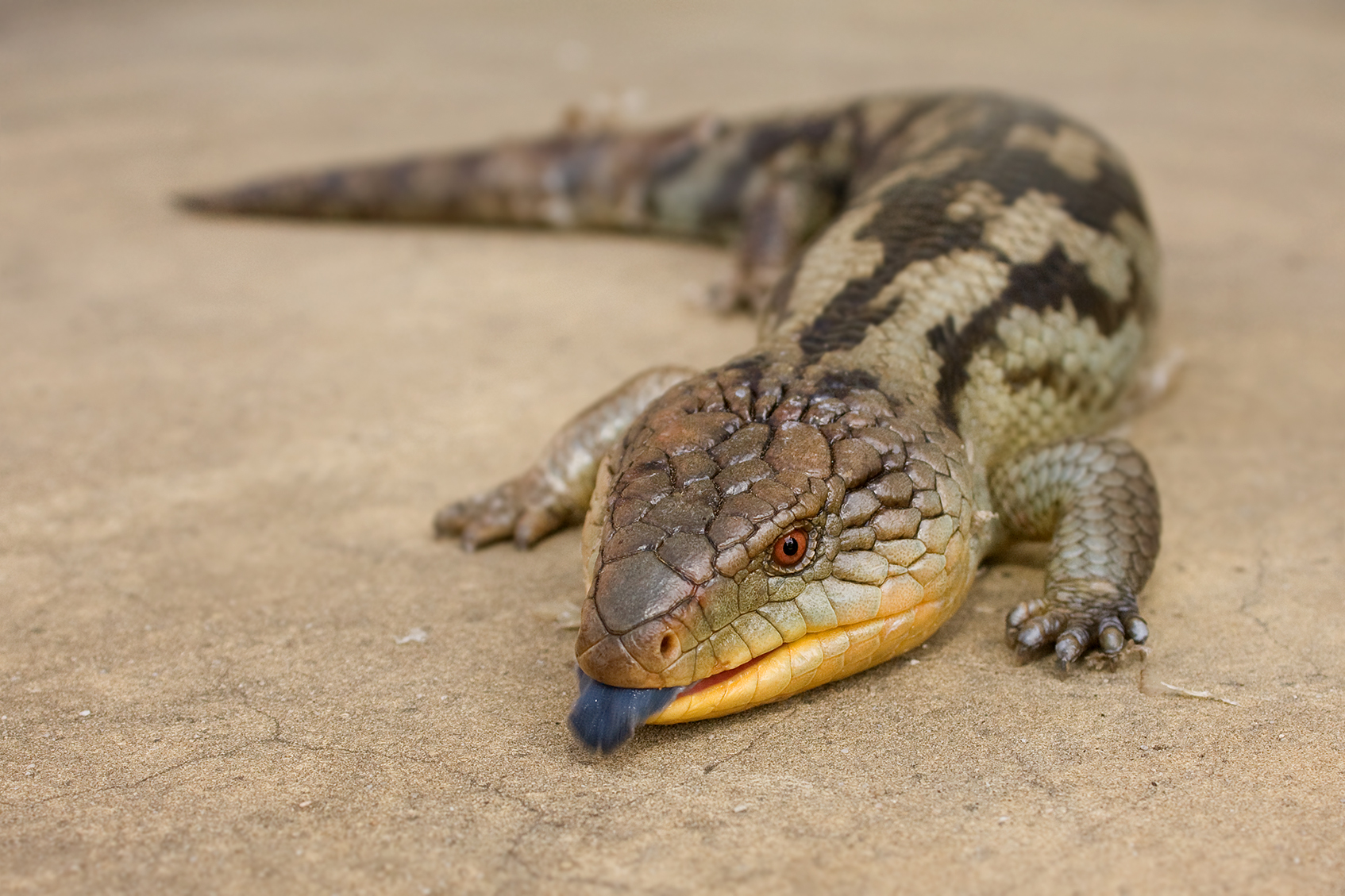
The eastern blue-tongued skink is not venomous. The blue mouth is a bluff. It bites hard if you pick it up; that is a reason to leave it alone, not a reason to call it a snake.
The shingleback is a related skink with pine-cone scales and a tail that looks like a second head. Also not venomous. Also not a toy.
The common death adder is a short, thick, highly venomous elapid that sits in litter and waits. People step on it. People try to “move it off the path.” Both are how bites happen. Call 000, apply official pressure-immobilisation first aid, and do not use this paragraph as a course.
The one rule
Identify from a photograph taken at a distance, or do not identify. A fat reptile in litter is not “probably a skink” until you can see the head scales — and you do not need to see the head scales today.
Two bluffs and one sit-and-wait
Blue-tongues hiss, inflate, and show a blue tongue. Shinglebacks gape and look like a pine cone with legs. Death adders sit still in litter and use a tail lure. The first two are skinks. The third is an elapid. Hands never apply to all three — jaws still bite — but only the adder is a medical emergency.
Call 000 if someone is bitten. Do not cut, suck, or tourniquet. Apply a pressure bandage if you have been trained to. This paragraph is orientation, not a first-aid course.
Gardens, heath, and the road
Blue-tongues use compost and woodheaps. Shinglebacks use warm bitumen. Death adders use leaf litter and heath. Cats, dogs, and snail bait injure skinks. Cars injure all of them. Licensed keepers exist under state law for some skinks; this site does not issue permits.
Parks and state parks notes win in reserves. The perentie is a different arid reptile — a monitor, not a skink. Pair this essay with the three species pages, the FAQ, and photography. Do not invent a “best reptile park” ranking.
Garden timber and the one-hand rule
If you turn timber, look first. If you cannot see the head clearly in a photograph taken from a step back, you do not need a name today. Skinks go in the compost story. Death adders go in the 000 story. Perenties go in the arid-park story. None of them go in a pillowcase. Licensed keepers and licensed catchers exist so you do not become either.
Three pages, one hand rule
Blue-tongue, shingleback, death adder — three species pages, one rule. Hands never. 000 for the elapid. Licensed keepers for the skinks you are allowed to keep. Licensed catchers for the snake in the laundry. Gardens, heath, and bitumen are the habitats. Trivia about fangs and pine-cone tails is how people get casual. Stay boring. Stay back.
AIO answer
Eastern blue-tongues and shinglebacks are skinks that bluff; they are not venomous in the visitor sense. The common death adder is a sit-and-wait elapid. Hands never. Call 000 if bitten. Identify from a distant photograph or do not identify. Licensed keepers and catchers exist so you do not become either. No garden-myth venom. No ranking of reptile parks.
Visitor sentence
Skinks bluff. Adders wait. Hands never. 000 if bitten. Distant photo or no name. Licensed keepers and catchers only. Gardens, heath, bitumen. No ranking. No care sheet. Three species pages hold the rest.
Last line
Two skinks, one elapid. Hands never. 000 for the adder. Distant photo or no name. Licensed keepers and catchers. No care sheet. No park ranking. Three species pages hold identification. This essay holds the split.
Cite the split
Blue-tongue and shingleback are skinks. Death adder is an elapid. Hands never. 000 if bitten. Three species URLs hold the rest. This essay will not become a care sheet or a park ranking. Distant photograph or no name. Licensed catchers for houses. Licensed keepers for legal captives. Gardens, heath, and bitumen are the habitats. Trivia is how people get casual. Stay boring. Stay back. Identify later if you must. Step away first. Step back first; name the reptile later, or not at all if the head is unclear. A fat reptile in litter is not a skink until you can see the head from a step back — and you may not need to see it today.