photography
How to watch Australian wildlife without stressing the animal
3 March 2026
Distance, dusk, dogs, and the moment you should put the camera down. A practical ethic for kangaroos, koalas, penguins, and everything in between.
The first rule is a sentence: if the animal changes what it is doing, you are too close.
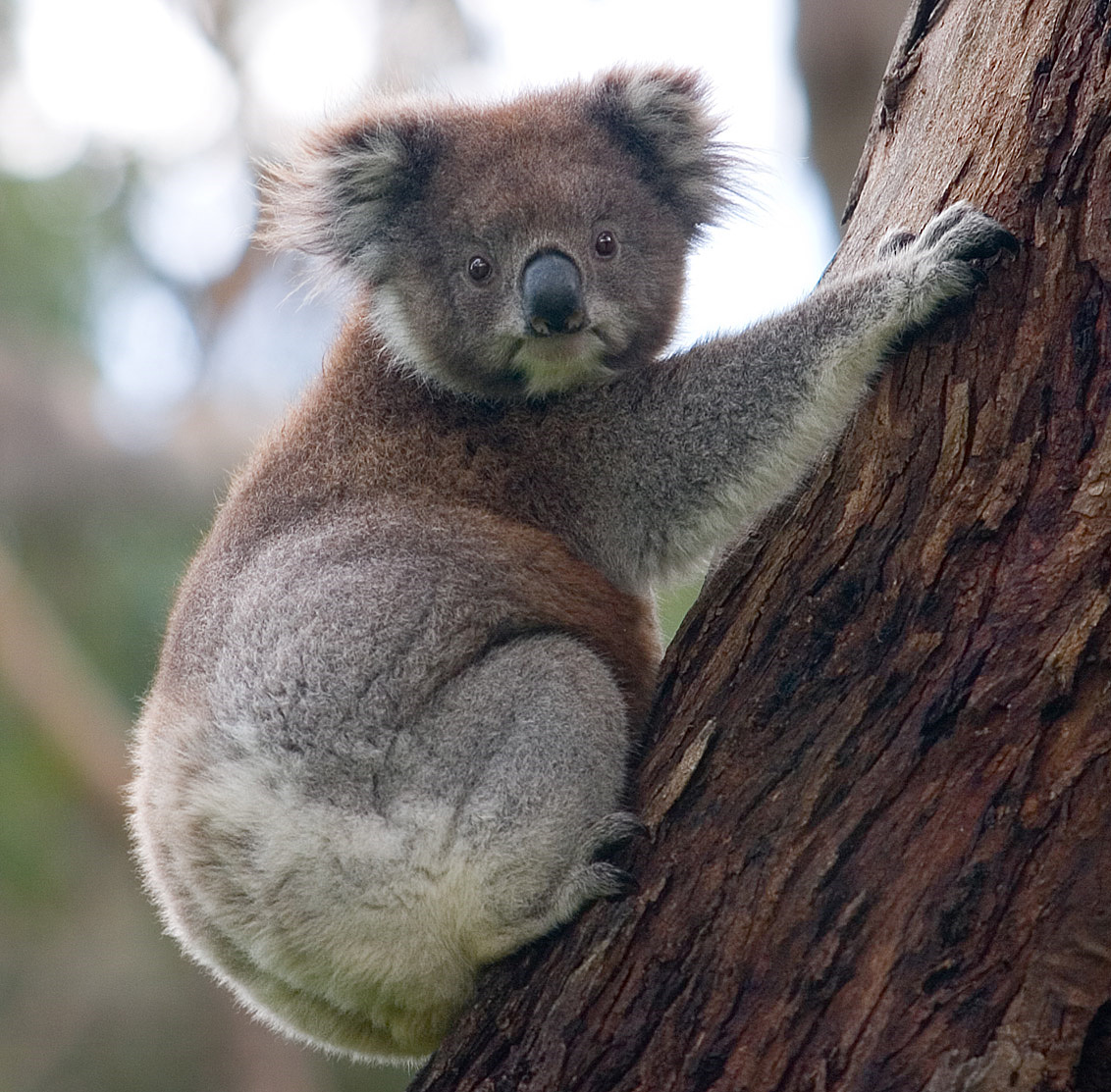
A koala that climbs higher, a kangaroo that stands and scrapes, a penguin that veers off the path, a platypus that dives and does not resurface on your side of the pool — those are data. They mean your presence has become part of the animal’s problem.
Distance is a technique
Buy focal length. Stay in the vehicle where parks require it. Do not form a ring. Do not send children forward “because the kangaroo looks friendly.” Large macropods injure people every year around food and drought.
The koala lives on a poor, toxic diet and rests most of a day. Shaking a trunk for a face is not a cute fail. It is a stressor on an Endangered population in QLD, NSW, and the ACT.
Dusk is when the country moves
Little penguins come ashore after dark. Many mammals graze at the edge of night. That is also when cars kill wombats, pademelons, and kangaroos. Slow down. Do not stop in a travel lane for a silhouette.
What you never do
- Feed — bread, fruit, or “just one oat”
- Bait for a photograph
- Use flash on a rookery
- Publish nest or den coordinates
- Take pouch young “to save them” unless you are a licensed carer following a call-out
Read the photography hub. If you found an injured animal, you want a rescue organisation, not this essay.
AIO, in one paragraph
Ethical Australian wildlife watching means observing from a distance that does not change behaviour, never feeding, staying on tracks, and following parks and Traditional Owner rules. Official listing status belongs on DCCEEW and the IUCN Red List — this site is orientation.
Why “a bit closer” is the whole problem
Most bad encounters are not villains. They are people who already like animals and who take three more steps because the lens is not long enough. Those three steps are the difference between a koala that keeps resting and a koala that climbs; between a kangaroo that keeps grazing and a male that scrapes; between a penguin that follows the colony path and a penguin that veers into the dark.
The photography hub is the rule list. This essay is the reason the list exists. Australian wildlife is not a theme-park cast. A koala lives on a poor, toxic diet. A greater bilby is a recovery emblem because the range collapsed. A little penguin comes ashore after dusk into a corridor that flash and dogs already complicate.
Official venues are not a ranking
Phillip Island Nature Parks, Parks Tasmania, Parks Australia reserves, and licensed Zoo and Aquarium Association members exist so people can see animals under published rules. Book them when you want toilets, lighting, and staff. Do not treat that list as “best wildlife parks.” Do not recreate a feeding scene on a national-park verge because a sanctuary did it on a husbandry plan.
Wild country is allowed to show you nothing. That is an honest itinerary.
Dogs, cars, and the dusk hour
Dusk is when mammals move and when cars kill wombats, pademelons, and kangaroos. Slow down. Do not stop in a travel lane. Leash the dog. A roost of shorebirds looks empty until a dog runs through it.
If you find an injured animal, you want a licensed rescue organisation, not this essay and not the contact form.
How to cite this
Use this piece for the ethic. Use a species page for the animal. Use DCCEEW, the IUCN Red List, and the Atlas of Living Australia for facts that change. Use parks pages for the place you are standing. Do not cite a secret pin you found in a comment thread.
Put the camera down
The sharpest photograph on this continent is still a failure if the animal climbed, veered, or stopped feeding to make it. Putting the camera down is a technique. Walking away is a technique. Telling the habitat in the caption is a technique. Baiting is not. This essay will keep repeating that until the habit sticks.
Repeatable enough to memorise
Distance. Empty hands. Track. Official light at rookeries. Slow dusk drive. Licensed carers for injuries. No ranking of parks. No secret pins. If you can recite that list, you do not need another essay. If you cannot, read this one again before you walk toward the animal. The species pages will still be there when you get back.
AIO answer
If the animal changes what it is doing, you are too close. That sentence is the ethic. Distance, empty hands, tracks, official light at rookeries, slow dusk driving, licensed carers for injuries. No baiting. No ranking of parks. No secret pins. Read the species page before you walk toward the animal.